Most business owners approach choosing a software development partner the same way they approach any large purchase: they collect quotes, compare numbers, and pick the option that seems like the best value.
This approach fails more often than it succeeds.
The price is visible on the proposal. The things that will actually determine whether your project succeeds are not. They come out only in conversation — the right conversations, asked before you sign anything.
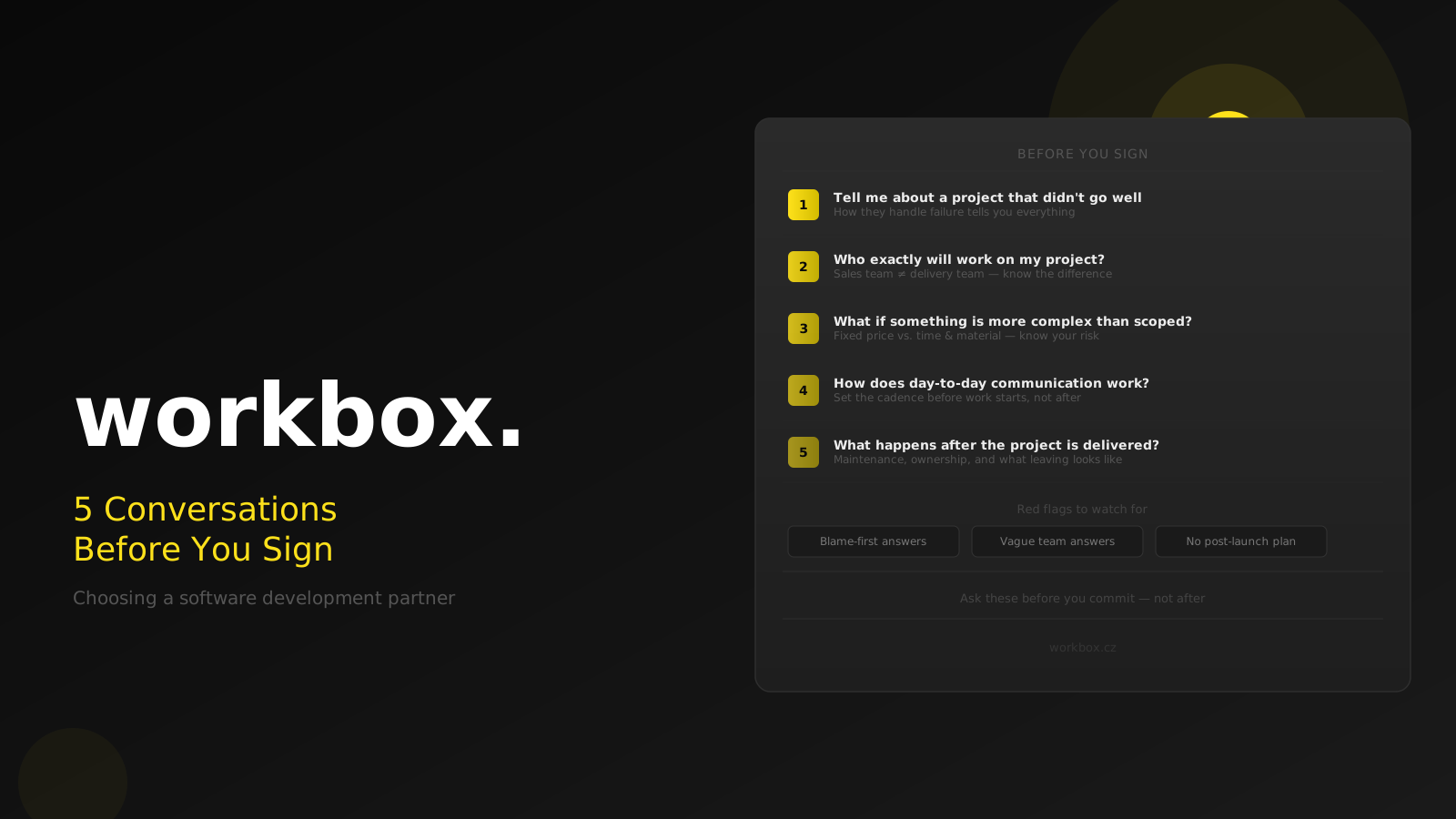
Here are five conversations worth having with every vendor you seriously consider.
1. "Walk me through a project that did not go well."
Every software development company has had projects that ran over budget, missed deadlines, or ended with an unhappy client. Any vendor who claims otherwise is either new or not being honest with you.
What you are looking for here is not a perfect track record. You are looking for how they talk about failure.
Do they blame the client? Do they talk in vague generalities about "scope changes" without taking any responsibility? Or do they give you a specific story — what happened, what they learned from it, and what they would do differently?
A company that can reflect honestly on past mistakes is one that is likely to handle problems well when they arise in your project. Because problems will arise.
What a good answer sounds like: "We had a project where we underestimated the complexity of an integration with a legacy system. We caught it at week four but didn't communicate it to the client quickly enough. That delayed the launch by six weeks. Since then we build all integrations as separate discovery items before locking in timelines."
What a bad answer sounds like: "We always deliver on time. The few issues we've had were because the client changed requirements mid-project."
2. "Who exactly will be working on my project?"
Software development companies present themselves in proposals. It is easy to be impressed by the quality of the team you meet during the sales process. But the people who sell you the project are often not the same people who build it.
Ask directly: who will be the day-to-day point of contact? Who is the lead developer? Will anyone from the team you're meeting today be hands-on in your project?
Also ask about continuity. What happens if the lead developer on your project leaves mid-build? Does the company have processes for knowledge transfer, or does institutional knowledge about your project live entirely in one person's head?
You are not just buying code. You are entering a relationship with a team. Make sure you know who you are actually entering that relationship with.
What to watch for: A company that hedges on team assignments, or that cannot tell you who specifically will be responsible for your project, is a company where you may end up with whoever is available rather than whoever is right for your needs.
3. "How do you handle it when something we agreed on turns out to be more complicated than expected?"
Software projects almost always encounter something that was more complex than it appeared during scoping. How your vendor handles this moment is one of the most important things to understand before you commit.
Some companies absorb reasonable complexity as part of their professional responsibility. Others treat every unexpected wrinkle as an opportunity to raise a change request and additional invoice. Both approaches can be legitimate — but you need to know which one you are signing up for.
Ask for a specific example: "Can you walk me through a situation where you discovered mid-project that something was significantly more complex than scoped? What did you do?"
Also ask about the commercial model: is the contract fixed-price, time-and-materials, or something else? Each structure creates different incentives. Fixed-price contracts put the risk of complexity on the vendor; time-and-materials contracts put it on you. Understanding this upfront will save you from unpleasant surprises later.
What to watch for: Vague answers about "working together to find a solution" without any concrete description of how complexity is actually managed or who absorbs the cost.
4. "What does communication look like day-to-day?"
This conversation sounds mundane. It is not. Miscommunication is one of the leading causes of software projects going wrong, and the patterns that lead to it are set in the first weeks of the engagement.
Ask specifically: How often will you get updates on progress? How will you be notified if something is off-track? What is the expected response time if you email or message with a question? Will you have access to any project management or tracking system so you can see the state of things without having to ask?
Also ask what they need from you. Good development teams will have specific expectations of their clients — timely decisions, prompt feedback on designs, available stakeholders for review sessions. If a vendor cannot articulate what they need from you to work effectively, that is a signal that they have not thought carefully about how to run a collaborative project.
What a good answer sounds like: "We use a shared Notion board where you can see the current sprint backlog and any open blockers. We have a standing call every two weeks, and for anything that might affect the timeline we reach out within 24 hours."
What a bad answer sounds like: "We'll keep you updated. Don't worry, we'll let you know if anything comes up."
5. "What happens after the project is delivered?"
A software project does not end at launch. Your system will need maintenance, security updates, and likely further development as your business evolves. If you have not thought about this before signing, you may find yourself in a difficult position afterward.
Ask the vendor about their post-launch support offering: is there a maintenance retainer, and what does it include? What is the response time for critical bugs — and what qualifies as "critical"? What happens if you want to add new features six months after launch — is there a process for that, or does every request go through a full new scoping exercise?
Also ask a more pointed question: "If we decided after six months that we wanted to bring the work in-house or switch to a different vendor, what would that look like?" How a company answers this question tells you a lot about how they think about client ownership of the work. You want a partner who is confident enough in their relationship with you that they are not worried about making it easy for you to leave.
What to watch for: Companies that are vague about post-launch support, that have no formal maintenance offering, or that make it sound difficult to access or own the code your project will produce.
How to use these conversations
You do not need to make these conversations feel like an interrogation. The best way to approach them is with genuine curiosity: you are trying to understand how this company thinks and works, not catch them out.
The vendors who handle these conversations well — who answer concretely, who tell stories, who are comfortable acknowledging uncertainty — are the ones most likely to handle your project well. The ones who deflect, oversell, or answer vaguely are showing you something important too.
A software development project is a significant investment of time, money, and internal energy. The five conversations above will not guarantee a perfect outcome — nothing will. But they will give you a much clearer picture of what you are actually signing up for.
If you would like to have these conversations with us, we are happy to start there.