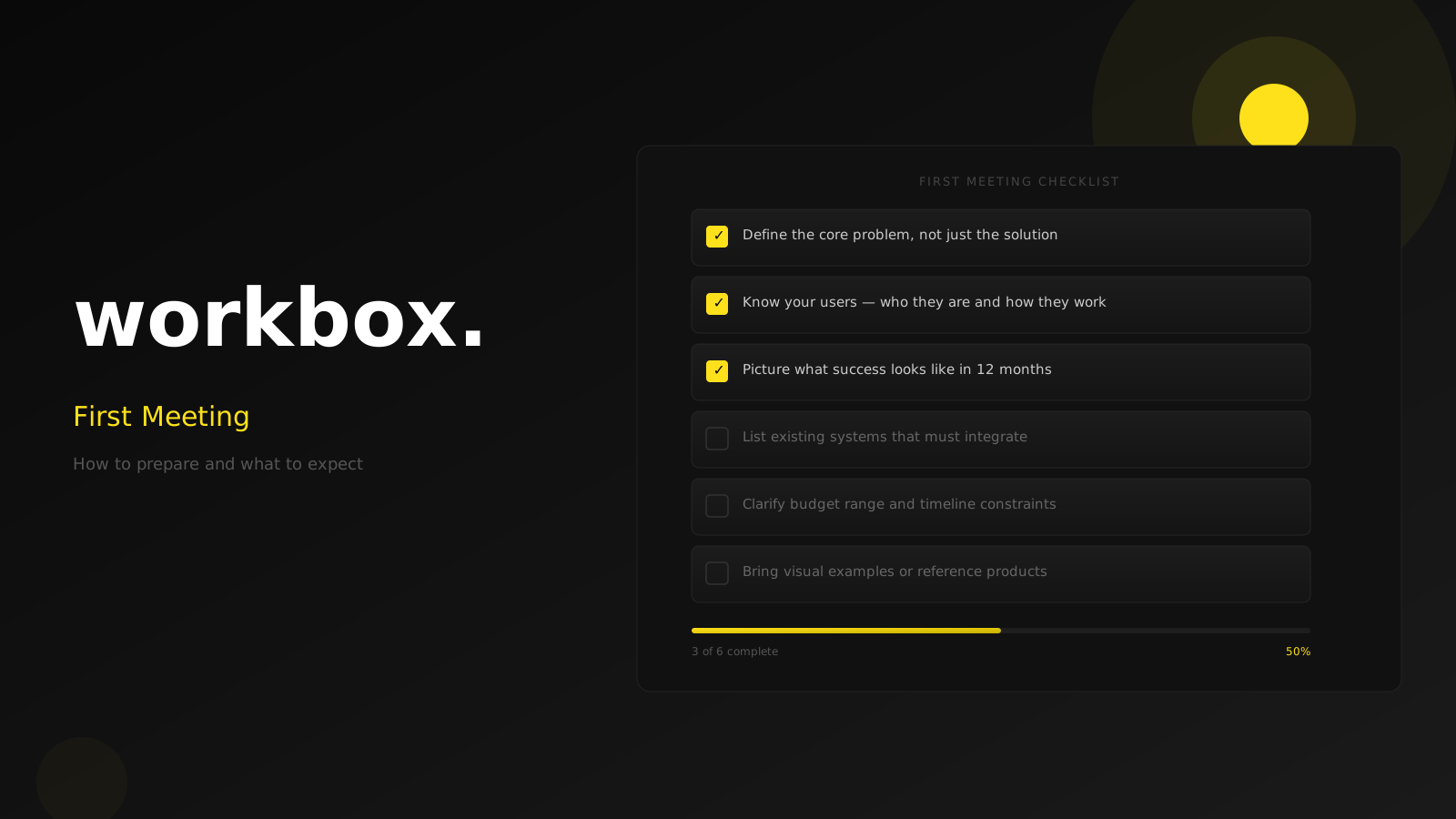
Most businesses approach their first meeting with a software development company the same way they approach a doctor's appointment: they show up, describe the symptoms, and wait for the expert to tell them what to do.
That is understandable. Software development is a specialist field, and it is reasonable to expect the experts to guide the process. But the businesses that get the most from these conversations — and ultimately from the projects that follow — come in with a different mindset. They arrive not with answers, but with the right information. And they know which questions to ask.
This guide will help you do exactly that.
Why the first meeting matters more than you think
The first conversation between a client and a development company is where a project either gets grounded in reality or starts to drift. It is when assumptions form — about what is being built, who it is for, how complex it is, and roughly what it might cost. Those assumptions, once formed, are hard to dislodge.
If you arrive at the meeting unprepared, the conversation tends to stay at a surface level. You describe a general idea. The developers ask a few standard questions. You leave with a rough sense of what might be possible and a promise of a quote that may or may not reflect what you actually need.
If you arrive prepared, something different happens. The conversation gets specific quickly. Real constraints surface early. The development team can give you a much more honest picture of what the project involves — and you can evaluate whether they are the right partner for it.
What to think through before you arrive
You do not need a formal specification document for a first meeting. What you do need is clarity on a handful of fundamental questions. Working through these before you arrive will make the conversation far more productive.
What problem are you actually trying to solve?
This sounds obvious, but most people arrive describing a solution rather than a problem. "We need a mobile app" or "we want a customer portal" are solutions. The problem underneath is something different: customers are struggling to get the information they need, or staff are spending too much time handling requests that could be self-served, or data that exists in three places needs to be in one.
The clearer you are about the underlying problem, the more useful the development company can be — because they may know of approaches to solving it that you have not considered. If you arrive with only the solution in mind, you constrain the conversation before it starts.
Who will use the system, and how?
Think about the people who will actually interact with what gets built. Are they your own staff? Your customers? Partners or suppliers? How technically comfortable are they? How often will they use it — daily, occasionally, once a month? Are they using it from a desk, on the move, in a warehouse?
This matters because it directly shapes what needs to be built. A system used daily by trained staff tolerates different design choices than one used occasionally by members of the public. Getting specific about users — even in rough terms — focuses the conversation immediately.
What does success look like one year from now?
A surprising number of projects fail not because the software does not work, but because nobody clearly defined what "working" meant. Before your meeting, spend a few minutes imagining your business twelve months after the project is complete. What is different? What processes are faster? What information do you have that you did not have before? What does a successful day look like?
These are not technical questions. They are business questions. But they are exactly the kind of questions that help a development company understand what to build — and how to prioritise when trade-offs arise.
What exists already?
Few projects start from a blank slate. Think about the systems, tools, and data that already exist in your business and that the new software might need to connect with. Your accounting system. Your CRM. Your inventory management tool. Your website. Even if you are not sure exactly how integration would work, naming what is there gives the development team something concrete to work with.
Also worth noting: if there is existing software that the new system is meant to replace or extend, bring any documentation or access you can. Even a demo of the current system is more valuable than a verbal description of it.
What are your constraints?
Budget and timeline are the obvious ones, and it is worth having at least a rough sense of both before the meeting — even if you are uncertain. A development company that knows you need something live within six months will design differently than one that has no time reference. And knowing you are working with a fixed budget allows them to help you prioritise what to build first, rather than scoping something that will not be achievable.
But constraints are not only financial. There may be compliance or security requirements specific to your industry. There may be limitations on what technology can be used because of existing infrastructure. There may be key people whose schedules shape the project. The earlier these come up, the better.
What to bring to the meeting
You do not need polished materials. What is genuinely useful:
A written summary of the problem. A single page describing the current situation and what you are trying to change. It does not need to be formal — even bullet points work. The act of writing it forces clarity, and having it in writing gives the development team something to refer to.
Examples of what good looks like. If you have seen a system — built for another company, a competitor's product, a consumer app — that has features or an experience close to what you are imagining, show it. Visual references communicate more efficiently than verbal descriptions, and they help avoid misunderstandings about what words like "simple" or "intuitive" actually mean.
Access to any relevant existing systems. Even a walk-through of your current process — screen-shared or in person — gives the development team a grounding in reality that a description cannot match.
The right people in the room. If the person who knows most about the day-to-day operations of the affected process is not you, bring them. The most expensive misunderstandings in software projects come from building something that satisfies the person who commissioned it but does not work for the person who has to use it every day.
What to expect from a good development company
The first meeting should not feel like a sales pitch. A development team worth working with will ask more questions than they answer in the first conversation — because they genuinely need to understand your situation before they can say anything useful about what it would take to address it.
Be wary of companies that arrive with ready-made solutions and minimal questions. The right partner for a custom software project is one that takes the time to understand your business first.
You should expect to talk about:
- The problem you are trying to solve, and why now
- Who the users are and what they need
- What success looks like, and how it would be measured
- What constraints are in play
- What a realistic process looks like — including timeline, milestones, and how the development company works
What you should not expect in a first meeting is a fixed quote. A project that is properly scoped — with a clear understanding of what needs to be built and why — takes more than one conversation to cost accurately. If a company gives you a firm number after thirty minutes, it is not a reliable estimate.
After the meeting
A productive first meeting generates follow-up questions — on both sides. The development company will likely want to explore certain areas more deeply before they can give you a realistic picture of scope and cost. You may realise that you need to clarify internally what your actual priorities are.
This is a good sign. It means the conversation reached the level of detail where real planning can happen.
The outcome of a first meeting should not be a signed contract. It should be a clear next step — typically a more detailed discovery conversation or a proposal process — and a mutual sense of whether you are likely to work well together.
If you are preparing for a first conversation about a software project and would like a candid, structured discussion of what it might involve — get in touch. We are happy to spend an hour understanding your situation before we make any suggestions about what to build.