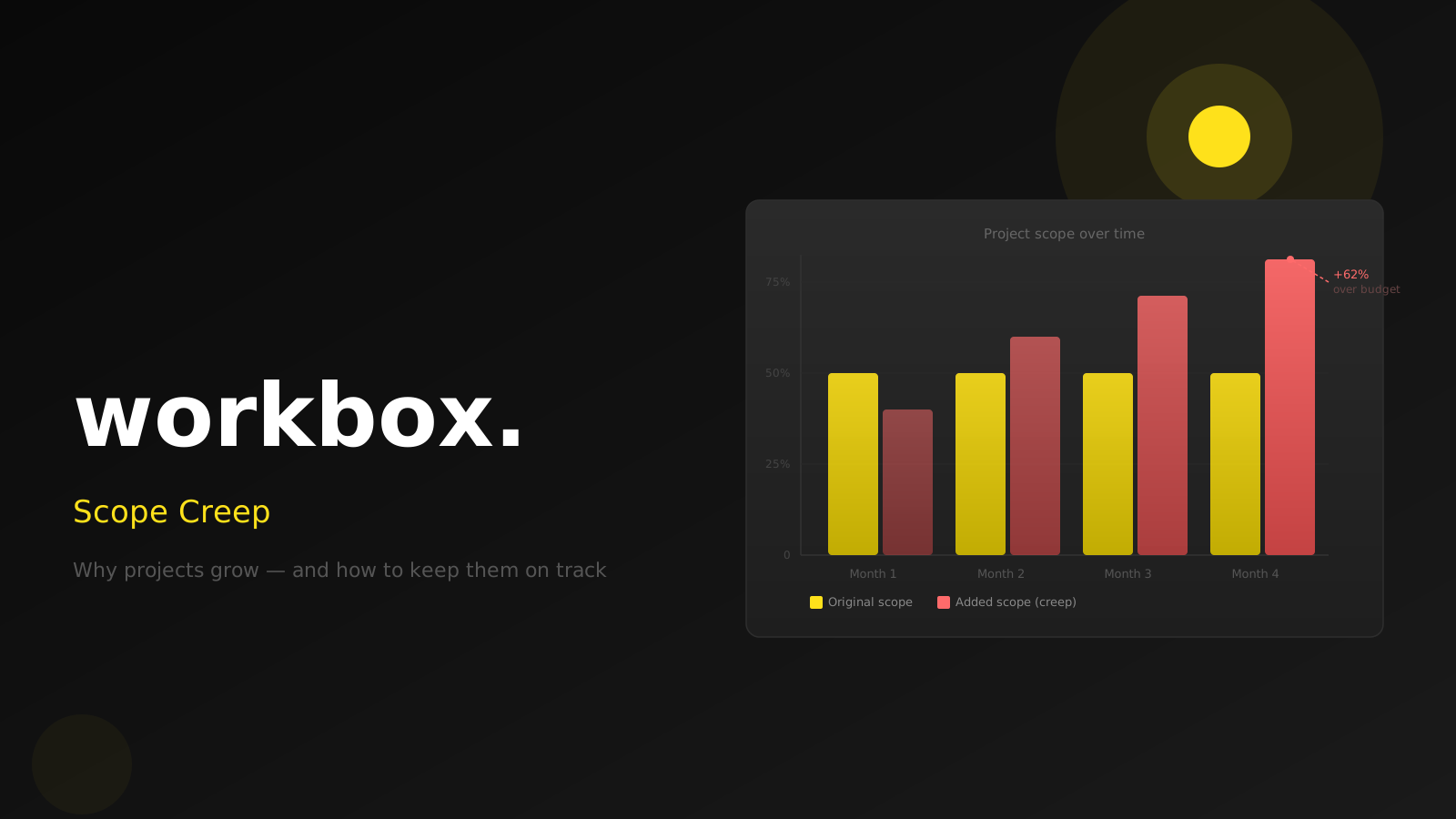
You agreed on a scope, signed a contract, and the project kicked off. A few weeks in, you have a small idea: "While we are at it, could we also add a notification feature?" The team says yes. Then comes another request. Then another. Three months later, the project is behind schedule, the budget is strained, and everyone is frustrated — even though each individual request seemed completely reasonable at the time.
This is scope creep. And it is one of the most common reasons software projects fail to deliver on time and on budget.
What scope creep actually is
Scope creep is the gradual expansion of a project's requirements beyond what was originally agreed. It rarely happens all at once. Instead, it accumulates in small increments — a new feature here, a revised requirement there, a "quick change" that turns out not to be quick at all.
Each addition feels minor in isolation. The problem is that software development is deeply interconnected. Adding a feature to one part of the system often requires changes in three other parts. What looks like a two-hour task from the outside can easily become a two-week undertaking once the full implications are understood.
The result: projects that were initially well-scoped and well-priced end up running significantly over budget and timeline — not because anyone made a mistake, but because the scope silently doubled.
Where it comes from
Understanding why scope creep happens is the first step to preventing it.
You discover new requirements during the project. Once development starts and you see early prototypes, you often realise things you did not think about during planning. This is normal — and it is actually a sign that the project is progressing. The question is how to handle these discoveries without derailing what was agreed.
Stakeholders have different expectations. In many companies, the person who signed the contract is not the person who will use the system every day. As internal teams get involved, new requirements surface. Each person has a slightly different picture of what the final product should do.
"Small" requests are made informally. A quick message to the project manager — "can we just add a filter to this table?" — bypasses the formal process. The developer adds the filter. Then someone wants the filter to sort differently. Then another column needs a filter too. None of it was in scope, and none of it was budgeted.
The original scope was vague. If requirements were described in broad terms at the start, both sides will interpret them differently as the project progresses. Gaps in the original specification become opportunities for misalignment.
Why it matters more than most clients expect
The financial impact is the most obvious. Every hour spent on out-of-scope work is an hour not spent on the original deliverables — or an hour that needs to be paid for separately.
But scope creep causes damage beyond the budget. It disrupts the development team's focus and momentum. Work that was nearly finished gets delayed while new requests are handled. Testing becomes harder because the system keeps changing. The team spends more time re-planning and less time building.
It also creates tension. The client feels the project is dragging. The development team feels constantly pulled in new directions. Trust erodes on both sides, even when both sides are acting in good faith.
How to prevent it
Start with a detailed specification. The more precisely the original scope is defined — with clear descriptions of features, user flows, and edge cases — the less room there is for ambiguity to breed new requirements. This upfront investment in clarity pays for itself many times over.
Establish a formal change process. Any request that goes beyond the original scope should go through a defined process: the request is documented, the impact on timeline and budget is assessed, and both parties agree before any work begins. This is not bureaucracy for its own sake — it is protection for both sides.
Separate "must have" from "nice to have." Before the project starts, categorise requirements by priority. Must-haves are in scope. Nice-to-haves are documented but deferred to a future phase. This gives everyone a shared understanding of what the project is actually trying to deliver — and a clear place to put new ideas that arise during development.
Create a backlog for new ideas. When a stakeholder suggests something that was not in the original scope, do not say no — capture it. A well-maintained backlog of future features respects good ideas without letting them derail the current project. Many of the best improvements come from feedback during development; the point is to time them correctly.
Review scope explicitly at each milestone. Regular check-ins that include a scope review — not just a progress update — help catch drift early. If scope is expanding, it is better to address it deliberately than to let it accumulate quietly.
Choose a development partner who manages scope actively. Some development companies are very good at building what you ask for but less proactive about flagging when informal requests are pulling the project off course. A mature partner will raise the issue before it becomes a problem.
When change is the right call
Preventing scope creep does not mean refusing all change. Requirements do evolve, and a good development process accommodates that.
The difference between healthy evolution and damaging scope creep is intentionality. When a change is evaluated, its impact understood, its cost agreed, and its priority set — that is a managed change. When changes accumulate informally, without cost or timeline implications being tracked — that is scope creep.
Some of the best software projects we have delivered at Workbox involved significant changes from the original specification. What made them successful was not that the scope never changed — it was that every change was deliberate, discussed, and decided together.
A note on fixed-price vs. time-and-materials contracts
Contract structure affects how scope creep plays out in practice.
Under a fixed-price contract, the risk of scope creep typically falls on the development company — they have committed to delivering X for a fixed sum, so any additions need to be negotiated as change orders. This incentivises both sides to be precise upfront.
Under a time-and-materials contract, every hour of work is billed regardless of scope. This gives more flexibility to accommodate changes, but it also makes it easier for scope to expand without anyone noticing until the invoice arrives.
Neither model eliminates the need to manage scope. Both require clear communication, documented requirements, and a shared understanding of what is in and out.
Worried that your next project might be heading towards scope creep — or working through one already? Talk to us and we will help you structure the project in a way that keeps things on track.