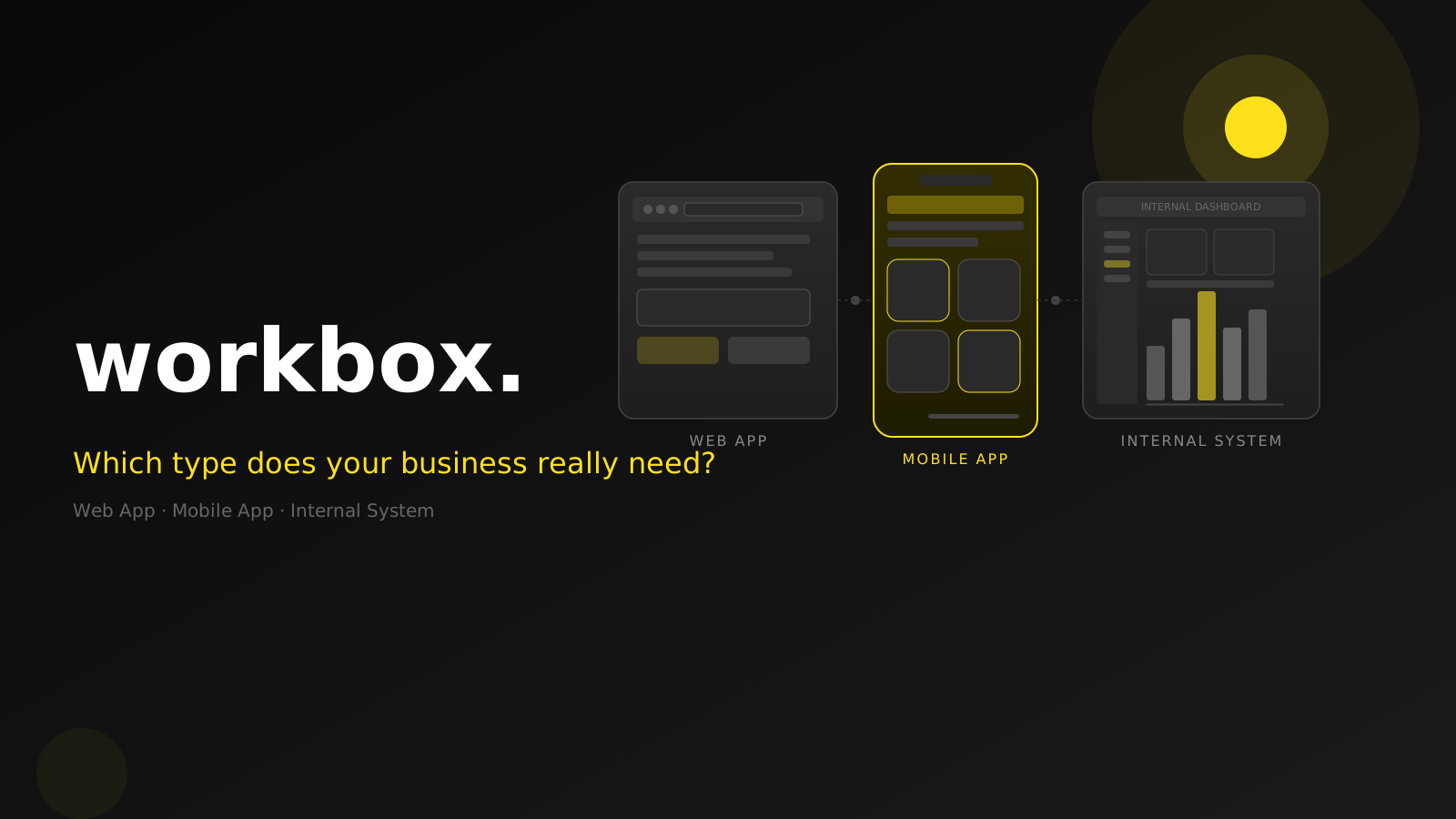
One of the most common questions we hear from business owners sounds deceptively simple: "We need an app — can you build us one?"
The honest answer is almost always: Which kind, and why?
This is not a pedantic question. The difference between a web app, a mobile app, and an internal business system can mean months of development time, hundreds of thousands in budget, and — most importantly — whether the end result actually solves your problem.
This guide explains each type in plain language, helps you recognise which one fits your situation, and flags the most expensive mistake companies make when they get it wrong.
Three types of software, three very different purposes
Web applications
A web app is software that runs in a browser. Your users — customers, partners, or staff — open a URL and the application is there. No installation required.
Web apps are the right tool when:
- You need to reach many different kinds of users across devices
- You want something that can be updated instantly without users doing anything
- You are building a customer portal, booking system, online configurator, or self-service tool
- You need the application to be publicly accessible or shareable via link
Modern web apps are highly capable. They can work offline, send notifications, and feel very close to native apps on most devices. For most business use cases — especially anything customer-facing — a well-built web app covers the ground completely.
Mobile applications
A native mobile app lives on a smartphone or tablet. The user downloads it from an app store, and it runs directly on the device.
Mobile apps have real advantages in specific situations:
- The core experience depends on device hardware — camera, GPS, biometrics, NFC
- Your users will use the product daily and the native feel matters for engagement
- You need full offline capability with local data processing
- You are building something like a field service tool, a delivery driver app, or a loyalty programme that benefits from push notifications and home screen presence
The important caveat: mobile apps cost significantly more to build and maintain. You are effectively building two separate products — one for iOS and one for Android — or using a cross-platform framework that has its own trade-offs. And every update needs to go through app store review, which takes time.
If your users will access the tool primarily from a desktop or laptop, or only occasionally from a phone, a mobile app is almost certainly not the right answer.
Internal business systems
This category covers the software that runs your business from the inside: production management tools, custom CRM systems, internal approval workflows, reporting dashboards, logistics platforms, warehouse management, and so on.
These systems are often invisible to the outside world but critical to operations. They rarely need to look beautiful — they need to be fast, reliable, and fit the way your team actually works.
Internal systems are the right choice when:
- You have a business process that no off-the-shelf product handles well
- Your team is spending hours on manual work that could be automated
- You are stitching together spreadsheets, emails, and multiple tools to do something that should be a single system
- You need to connect data from different parts of the business in one place
This is also the category that gets the least attention in conversations about "building an app" — but it is often where custom software delivers the clearest return on investment.
The most common mistake
Companies often arrive at a decision about what to build before they have properly defined what problem they are solving.
We regularly speak with business owners who want a mobile app because they have seen competitors launch one — without asking whether their customers actually need or want it. Or they describe a complex internal workflow problem and immediately ask for "a web app," when what they really need is an internal system that looks very different from a public-facing product.
The result is software that technically works but does not move the needle on the actual problem.
Questions that clarify the decision
These questions are more useful than any framework:
Who will use this, and where? Customers or partners who are mostly on their phones? Staff who sit at desks? Field workers moving between locations? The answer shapes almost everything else.
How often will people use it? Something used daily by the same people (internal ops tool, field app) warrants more investment in native experience. Something accessed occasionally (a self-service portal, a document tracker) does not need to be a native app.
Does the experience depend on the phone itself? Camera for photo capture, GPS for location tracking, NFC for payments or identification, biometric authentication — if yes, mobile is likely the right direction. If not, a web app will almost certainly do the job.
Does it need to work without internet? If users are regularly in places with poor or no connectivity and they need to keep working, that is a genuine argument for native mobile or a specific offline-capable architecture.
Is this customer-facing or internal? Customer-facing tools generally need more polish and careful UX. Internal tools need reliability and fit — they do not need to impress anyone who has not already onboarded.
When you might need more than one
Some projects genuinely need a combination. A logistics company might need an internal dashboard for dispatchers, a web portal for clients to track shipments, and a mobile app for drivers — all connected to the same backend.
The key is to design these pieces together from the beginning, not to build each one independently and try to connect them later. The shared data layer and integrations between components are often where the real complexity — and the real value — lives.
A word on cost
The honest version: web apps and internal systems are almost always cheaper to build and maintain than native mobile apps. If a vendor proposes a mobile app for a use case that does not genuinely require it, it is worth asking why.
That said, "cheaper to build" is not the only metric. If your business case requires a native mobile experience, cutting corners by choosing the wrong type of software will cost more in the long run — in workarounds, rewrites, and user frustration.
The right type of software is the one that solves your actual problem at a cost that makes sense over the next three to five years, not just in the first sprint.
Not sure which type of system fits your situation? Get in touch — we will help you think through the problem clearly before any code gets written.