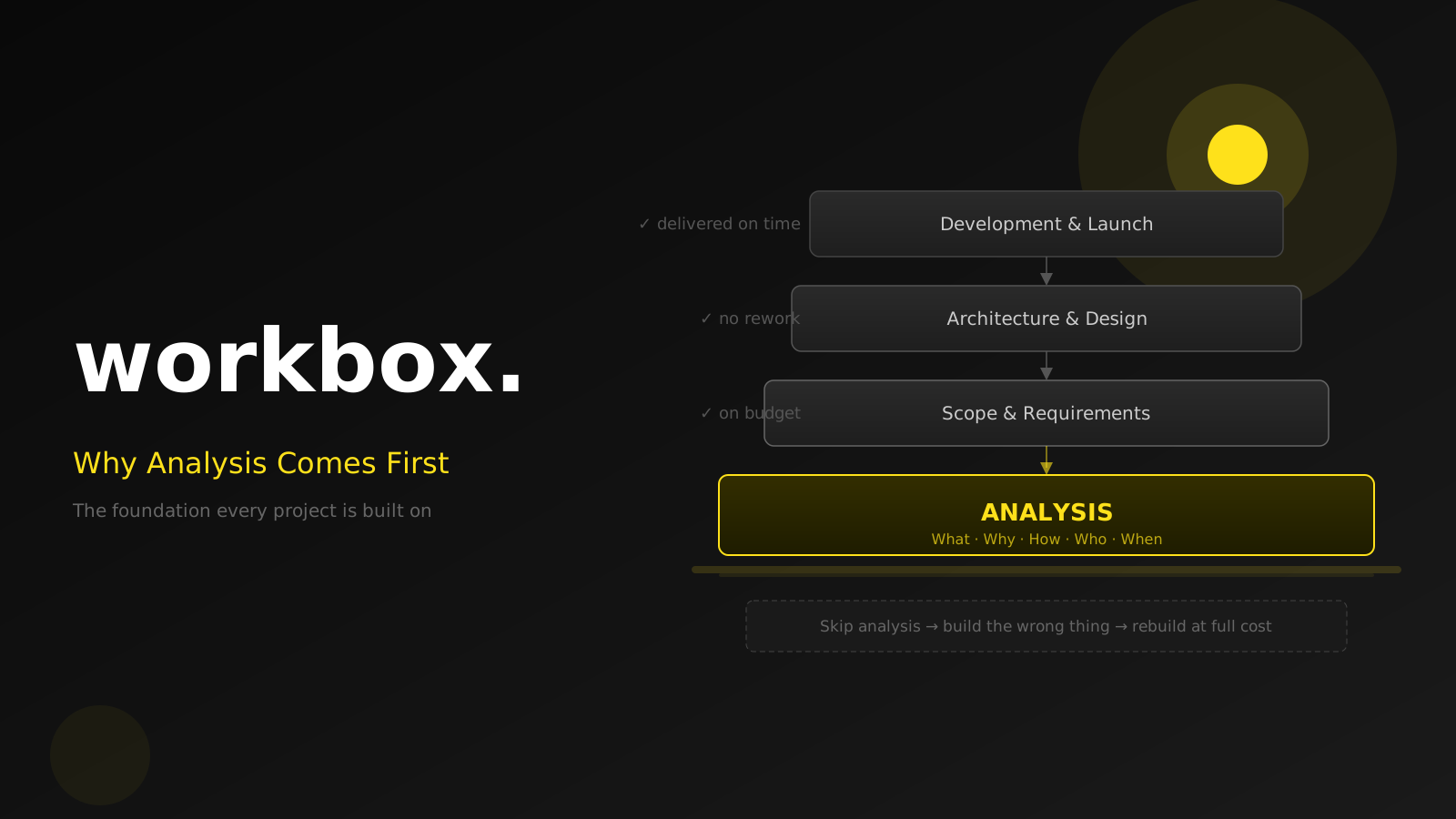
Ask anyone who has been through a painful software project what went wrong, and the answer is almost never "the developers wrote bad code." More often, it is something like: "We built the wrong thing" — or "We didn't know what we actually needed until halfway through."
This is the problem that good analysis solves. And it is the reason why experienced software teams insist on it before writing a single line of code.
What "analysis" actually means in a software project
Analysis is the phase where you figure out exactly what needs to be built — and why.
It is not a long meeting where someone writes down a list of features. Done properly, analysis involves:
- Understanding your business processes — how work flows through your organisation today, where the bottlenecks are, and what outcomes the software needs to support
- Defining the right scope — what is in, what is deliberately out, and in what order things should be built
- Identifying risks and constraints early — technical, organisational, or regulatory issues that will affect the build
- Aligning everyone on the goal — so that your team, the developers, and any other stakeholders share a single, concrete understanding of what success looks like
The output is typically a set of structured documents: user stories, process maps, wireframes, or a functional specification — depending on the complexity of the project and the methodology used.
Why so many clients want to skip it
Analysis costs money and takes time. Neither of those things feels good when you are eager to get something built. It is entirely natural to feel like you are paying for paperwork instead of software.
There are also clients who genuinely believe they already know exactly what they need. They have thought about it for months. They have sketches, spreadsheets, maybe even a slide deck. Why would they need someone to figure it out again?
The honest answer: because knowing what you want is not the same as knowing what to build.
A business owner understands their problem deeply. A software development team understands how to solve problems with software. Analysis is where those two kinds of knowledge meet — and where the gap between them becomes visible.
That gap is almost always larger than it looks.
What happens when you skip analysis
The most expensive software projects are the ones where analysis was skipped in the name of moving fast.
Here is what typically happens:
The scope grows mid-project. As development progresses, new requirements emerge that nobody thought of at the start. Each one adds cost and delays the timeline. This is called scope creep, and it is the single most common reason software projects run over budget.
The wrong thing gets built. Development teams build exactly what they are told to build. If the brief was vague or incomplete, the result will be vague or incomplete — and expensive to redo.
Integration problems appear late. If the new system needs to connect to your existing tools — your ERP, your accounting software, your e-commerce platform — and nobody mapped those connections in advance, you will discover the complications at the worst possible moment: when the budget is spent and the deadline has passed.
Stakeholders disagree at the end. When different people in an organisation have different mental pictures of the project, those differences surface during testing or launch — not at the start, where they are easy to resolve.
The system is technically sound but practically unusable. Software that does not match the way people actually work will be rejected, worked around, or abandoned — regardless of how well it was built.
What good analysis produces
A proper analysis phase does not just produce documents. It produces clarity.
After a well-run analysis, you should know:
- Exactly what will be built — described in enough detail that there is no ambiguity between you and your development team
- Why each part exists — connected to a real business need, not just a feature someone requested
- How the system will connect to your other tools — with the integrations designed before, not discovered during
- What the project will cost and how long it will take — with a realistic estimate based on defined scope, not a guess based on a brief description
- What the risks are — and what the plan is to handle them
This is also the point where you should discover whether your original idea needs to change. That is not a failure — it is the system working. Discovering a problem in analysis costs a fraction of discovering the same problem in development.
How long and how much
There is no universal answer, but a rough guide:
- For a simple internal tool or process automation, analysis typically takes one to three weeks and a modest fraction of the overall project budget.
- For a mid-size business application, allow for two to four weeks, with a correspondingly larger analysis investment.
- For a complex system with multiple integrations, user types, or regulatory requirements, a thorough analysis phase may run four to eight weeks — and the money spent there will be recovered many times over in avoided rework.
It is worth thinking of analysis not as a cost but as insurance. The questions it answers would have had to be answered eventually. The only choice is whether to answer them at the start — cheaply — or in the middle of development, where the answers cost much more.
How to tell if your development partner is doing analysis properly
Not all teams call it "analysis." Some use words like discovery, scoping, or workshop. The label matters less than what actually happens.
Signs that the process is being done well:
- They ask questions you hadn't considered. A team doing thorough analysis will surface assumptions you didn't know you were making. This can feel uncomfortable, but it is a good sign.
- They push back on your requirements. Good analysis sometimes involves saying "here is a simpler way to achieve the same outcome." A team that accepts every requirement without question is not doing analysis — they are just taking notes.
- The output is specific, not generic. If the documents they produce could apply to any business, the analysis was not done with enough depth.
- They can explain the trade-offs. Every design decision in a software project involves trade-offs. A good analysis team can tell you what options exist and why they are recommending one over the others.
The most important thing to understand
Analysis is not a preliminary formality before the real work starts. It is where the real work starts.
The decisions made during analysis — what to build, how to prioritise, what to leave out, how the pieces connect — determine most of the outcome of the project. By the time development begins, the shape of the result is already largely set.
A development team that moves fast without analysis is not saving time. They are borrowing it — at very high interest.
If you are planning a software project and are not sure how much analysis you need, get in touch. We will help you scope it honestly — and we will tell you upfront if there are parts of your plan that need more thinking before we write a line of code.